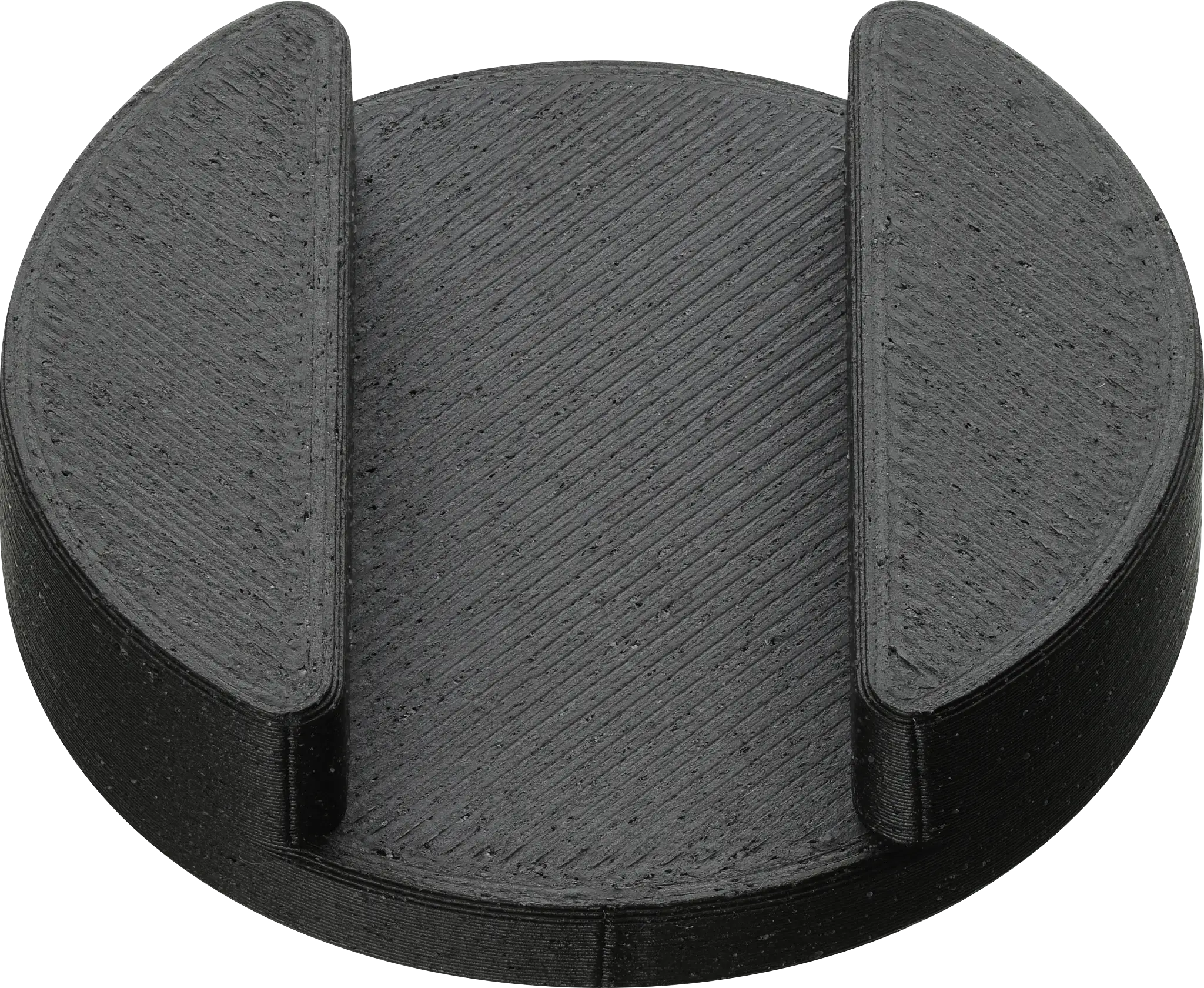
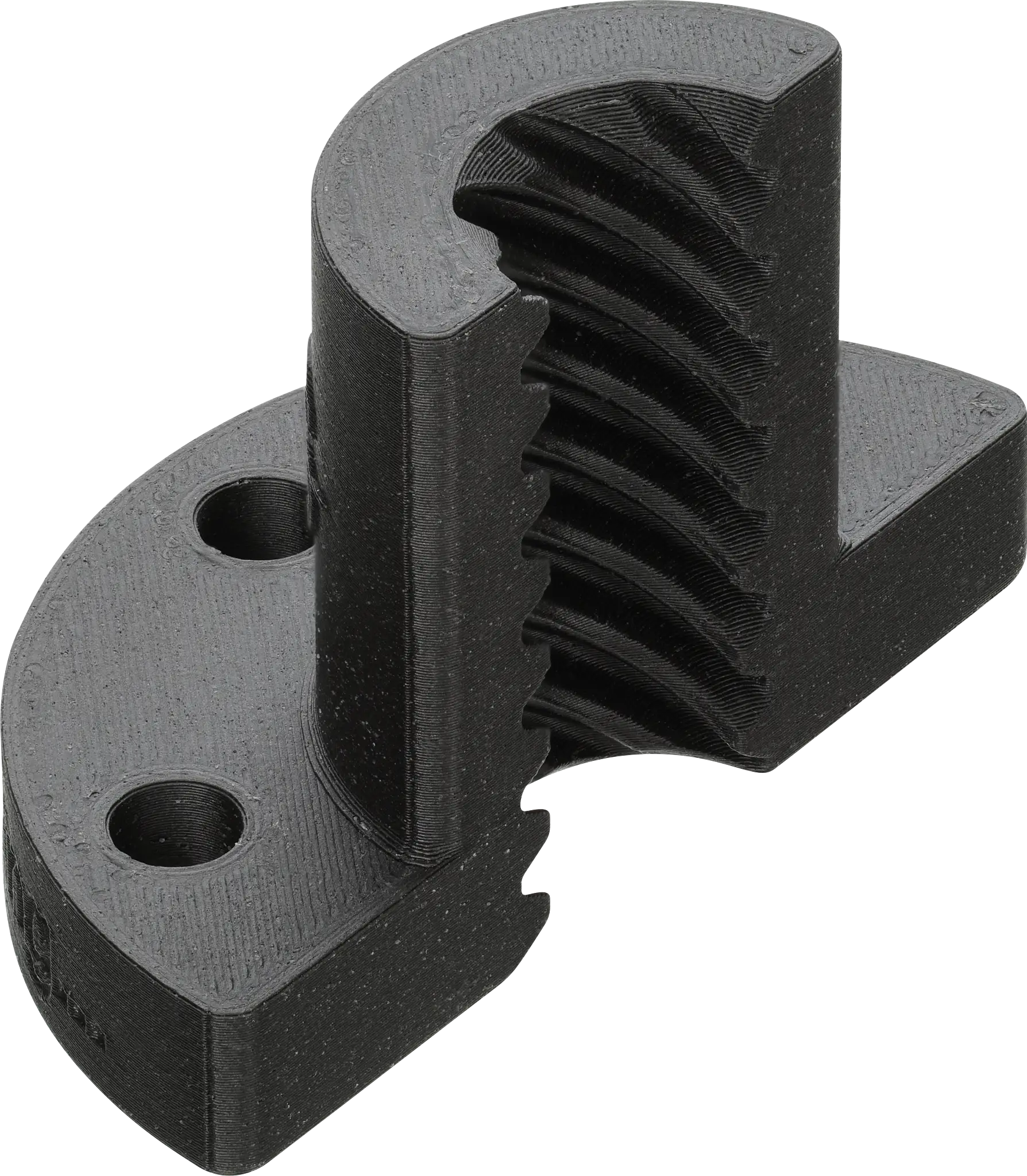
The material profile for processing iglidur i180 on Bambu Lab X1 / P1 / H2 / P2 3D printers can be found on this page in the "Downloads" tab.
The material profile for Ultimaker printers is available for download in their Cura marketplace: Go to Ultimaker Marketplace
Here you will find an overview of all the material profiles that we offer for download: Go to print profiles overview
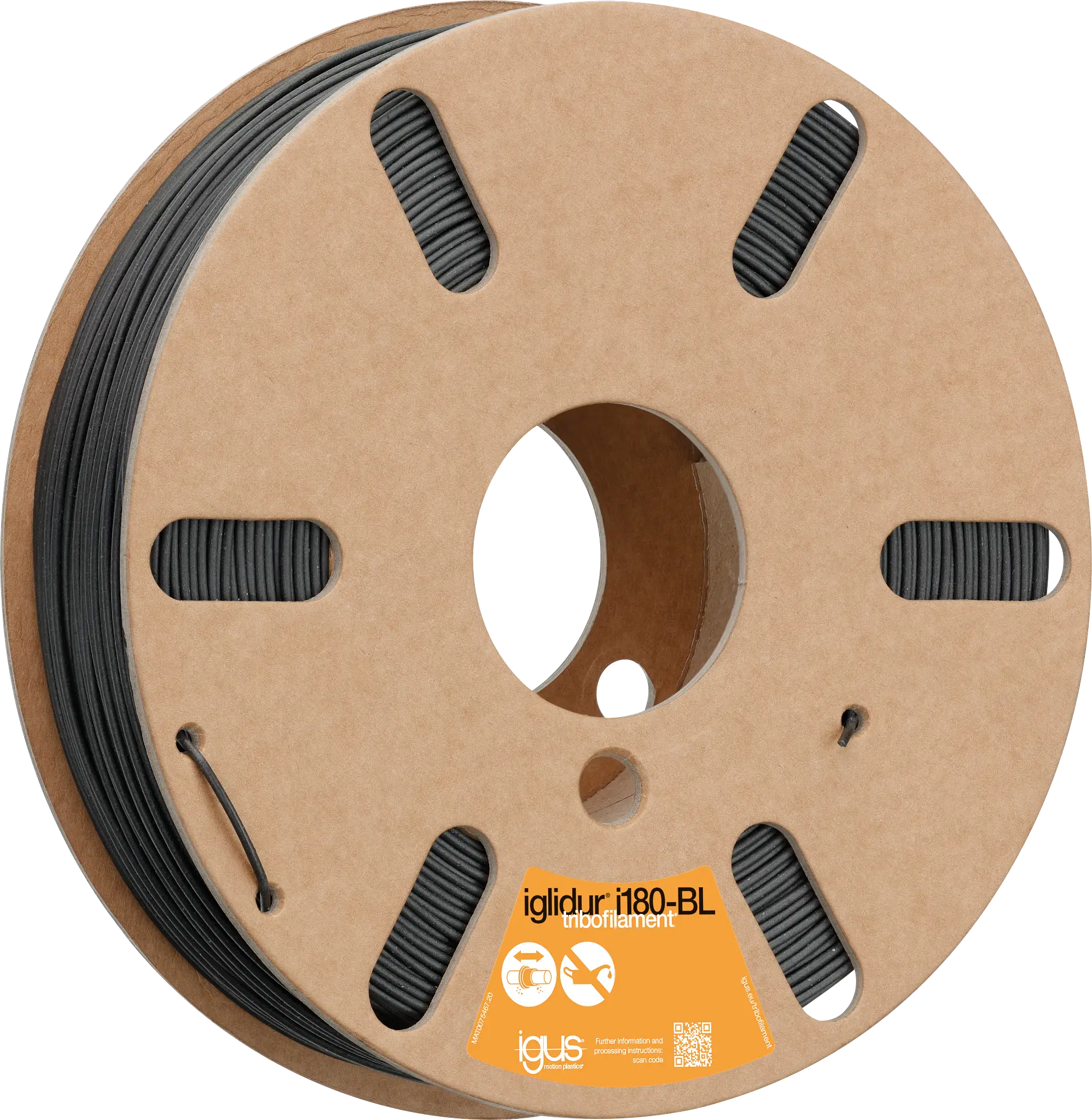
Self-lubricating filament iglidur i180
Components made from the 3D printing material iglidur i180 can be used universally for all types of wear parts, such as plain bearings, gears and drive nuts, as this material has also been specifically developed for moving applications. The higher wear resistance and higher temperature resistance (100°C over the long term) extend the range of application, especially for more dynamic applications with higher surface speeds. The filament is easy to process on encased 3D printers and is somewhat higher in terms of processing requirements than an ABS filament. At the igus Adhesive film for the print bed or the Bonding agent for tribofilaments accessory materials are available to facilitate processing.
Good to know: Due to its slightly lower density, the 750 g spool of the iglidur i180 tribofilament has a longer running length, which is why the material has so far been wound on a wider spool than usual. The packaging quantity of all i180 and i180-BL 750 g articles will be successively changed to a quantity of 700 g in order to be able to use a standard-sized spool. This is compatible with automatic filament systems such as the Bambu Lab AMS. Of course, this does not result in any disadvantages in terms of cost.
When to use it?
- When an increased permanent application temperature of up to 100°C is required.
- For highly dynamic plain bearing applications
When not to use it?
- If the application temperature is higher than 100°C in the long-term, or even higher wear resistance is required (→ iglidur J260)
- If I need a filament that is very easy to process or if I only have an open 3D printer (→ iglidur i150)